


A fascinating insight into Anarcho-punk history, and its deeper roots with the earlier anarchists of the 20th century
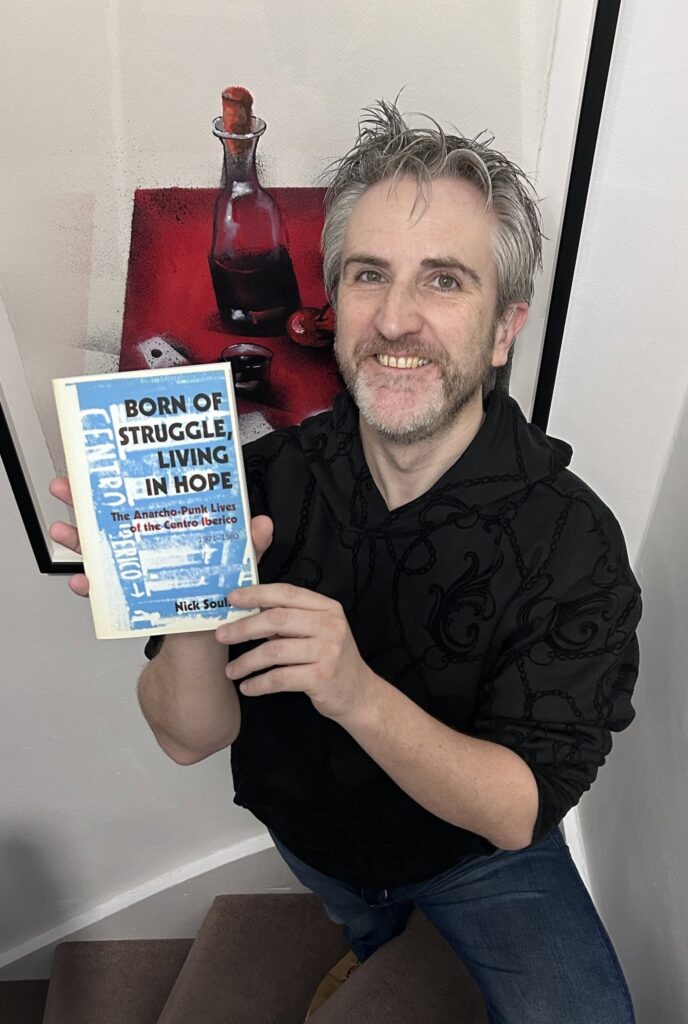
This new 192-page book by Nick Soulsby explains the links between the anarcho-syndicalist trade union federation CNT in Spain in the 1930s, and bands such as Crass, Poison Girls, Zounds and The Mob playing in London in the 1980s. Author Nick has previously written about Nirvana, Thurston Moore, Swans and Coil.
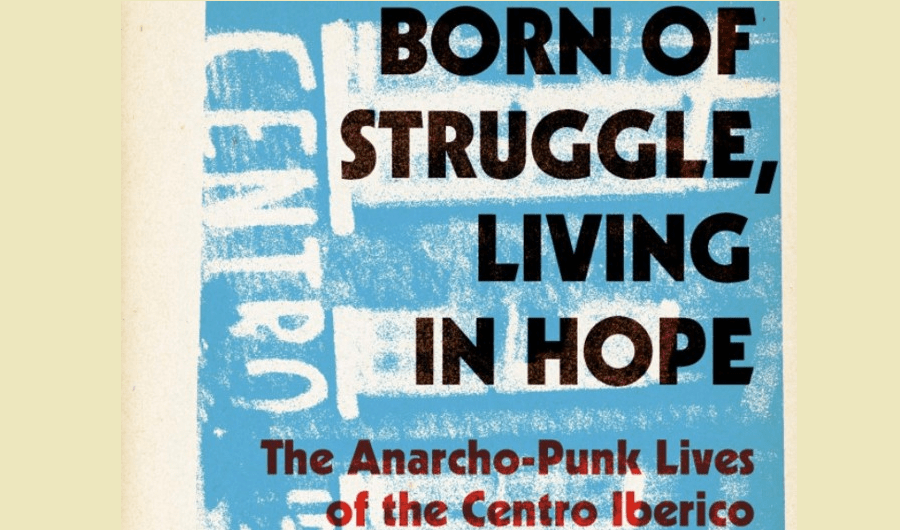
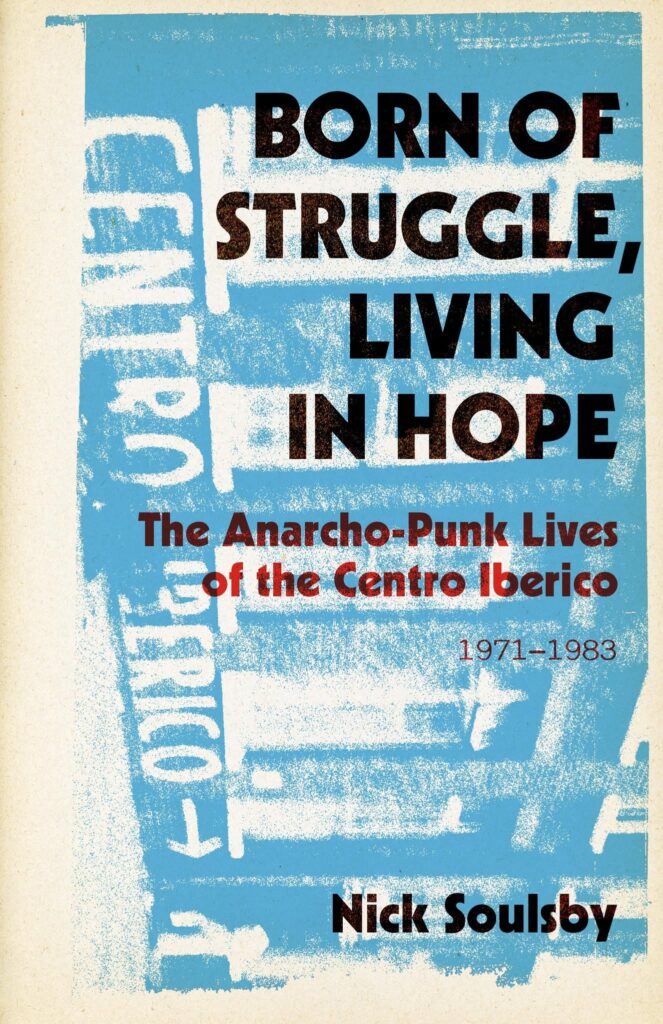
Now, PM Press has published ‘Born of Struggle, Living in Hope: The Anarcho-Punk Lives of the Centro Iberico, 1971-1983’. Nick did his research meticulously, not only on individuals, anarchist organisations and bands, but also on the histories of London buildings where these people, organisations and bands were active. It starts decades before 1980s music journalists coined the term Anarcho-punk, at a time when anarchism already existed, and punk did not – yet.

The CNT is an anarcho-syndicalist trade union federation in Spain. Founded in 1910; by 1934 they had over 1, 580,000 members.
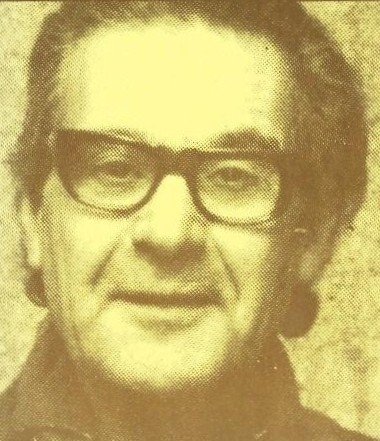
One of these was Miguel García García. During the Spanish Civil War, 1936-1939, he fought alongside other anarchists and anti-fascists, against the forces of coup d’état General Franco and his German and Italian helpers sent by Hitler and Mussolini. After the fascist alliance had won, Miguel García was ‘lucky’ not to disappear into one of the thousands of Franco’s unmarked mass graves. Instead, he survived a Francoist concentration camp. During the Second World War, he helped refugees escape from Hitler and his ally, the Pétain regime in France.

After 1945, García was active in underground trade union anti-Franco resistance, until the regime caught him in 1949 and condemned him to death in 1952. The other prisoners, condemned along with García, disappeared in Franco’s mass graves. Miraculously, García’s sentence was commuted to life imprisonment. Prison conditions gravely damaged his eyesight, his heart and his ability to speak. He did learn English from English-speaking fellow prisoners.
In 1969, mass resistance, including massive hunger strikes by prisoners, put pressure on the regime. Authorities allowed 61-year-old García to leave the prison and leave Spain, on the condition that he would never be allowed to return.
The Anarchist Black Cross in London found housing and medical care for him. Miguel García García addressed meetings and wrote about his imprisonment experience, appealing for help for those still in Spanish fascist jails. He joined the Anarchist Black Cross.

In May 1971, García took over the Iberian Center, the Centro Ibérico, from London Spanish communist party refugees who were moving elsewhere. The Centro had meetings once a week at the parish hall of the Anglican church Holy Trinity, Kingsway.
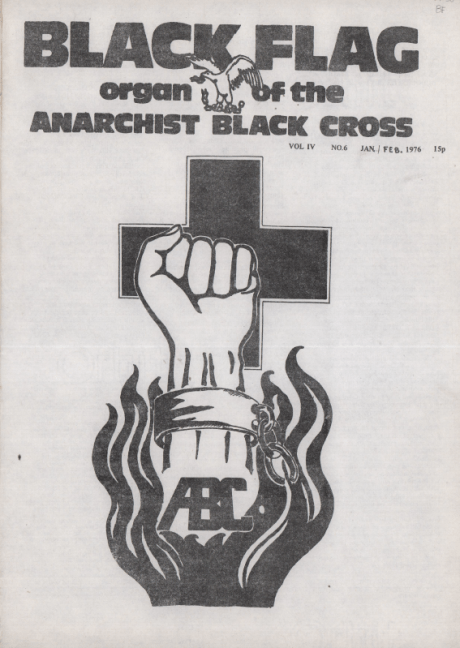
The Centro Ibérico printed the Anarchist Black Cross Federation’s newsletter, Black Flag; not to be confused with the later United States punk band of that name! It helped political prisoners and activists in Spain; it helped Spanish au pair girls exploited by English bosses; it helped Spanish women who could not get legal abortions in Spain to get legal abortions in Britain.

In 1973, the Centro Ibérico moved to a basement at Haverstock Hill. Meetings, including music, May Day celebrations and showing Luis Buñuel films, became more frequent than once a week.
In 1975, Franco died. In 1977, the anarchist political prisoners in Spain were freed. Sadly, Centro Ibérico help for the now legal Spanish anarchists was hindered by the landlord evicting the Centro to turn its space into a gambling den.
In November 1977, the Centro Ibérico moved to a squatted school on Harrow Road. Bands had played there, including the 101ers, Joe Strummer‘s pub rock band before he joined The Clash.
García went back to Spain in 1978.
Meanwhile, the punk movement, small at first, had started in London. After the December 1976 TV confrontation between presenter Bill Grundy and the Sex Pistols and Siouxsie Sioux, millions of people across the UK and internationally learned about it, and many young people felt attracted. Vivienne Westwood, central to early punk, considered herself an anarchist, discussing anarchism often with the Sex Pistols.

Soulsby’s book quotes how London pre-punk anarchists reacted to the rise of punk. It is interesting to put their reactions into perspective by comparing them to those of the UK corporate media, to Maoists and Trotskyists, and to pre-1977 anarchists in The Netherlands.
Black Flag IV, no. 15, 1977, mentioned that the London corporate daily Evening News, part of the Daily Mail empire, considered punk nazi, linked to the neo-fascist National Front. The Centro Ibérico-printed anarchist paper quoted the reaction to that by Malcolm McLaren on behalf of the Sex Pistols: “ANARCHY – I would like to point out that the Sex Pistols are not into any political party, least of all the loathsome National Front … We and our fans do not and will not co-operate or associate with the National Front. Anarchy is not fascism, but self-rule and a belief in following ones own way of life without recourse to dictatorship or nationalism. We hate this kind of army nonsense.”
Black Flag commented on the Evening News and the anarchist and anti-fascist statement by the Sex Pistols: “[the Evening News article is] in fact designed to boost the N[ational] F[ront] among working class youth [probably thinking about the Daily Mail empire already boosting fascism in the UK in the 1930s] … Their [the Sex Pistols’] music may be as rotten as they say it is, but what they are saying sounds as melodic as Beethoven …. and the pressure on the kids ultimately to conform will be great. But the punks [of the new movement] are no punks [in the older sense as a term of abuse, calling someone worthless] in getting anarchy over to some of the kids in the working class where it belongs.” Nick Soulsby comments: “how effective these ragged children were at communicating with the British working classes, certainly far more effective than the anarchists themselves [meaning in 1970s London, not 1930s Spain] had been.”
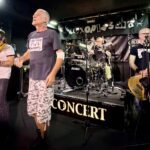
In spring 1978, the Anarchist Black Cross organised a punk band concert in Conway Hall.
Soulsby notes that some “traditional anarchists” were worried that punks might reinforce prejudices against anarchists supposedly being “wild-eyed and vomiting, spreading outrage and vandalism. They were also tepid toward the punks co-opting the anarchist ‘A’ without much sense of its meaning”.
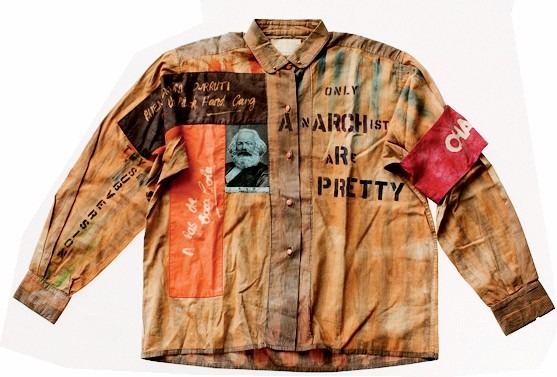
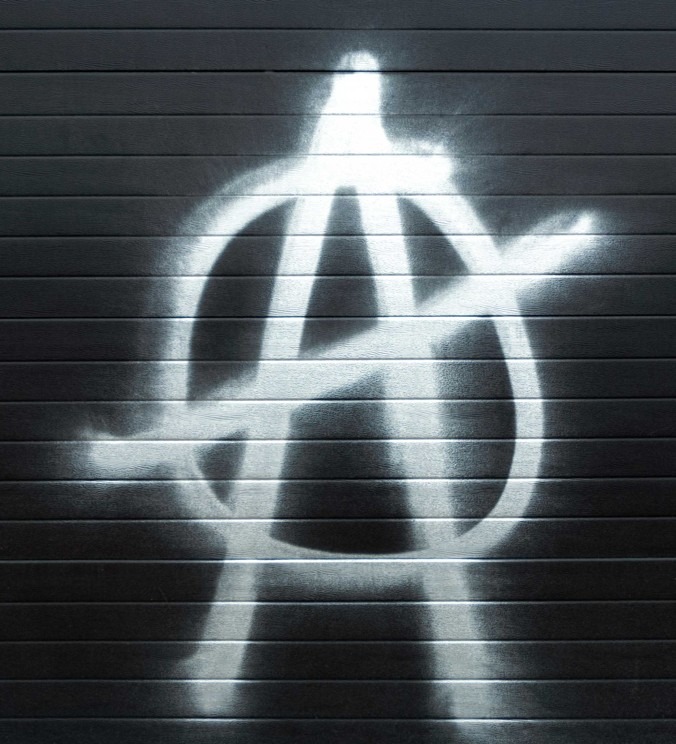
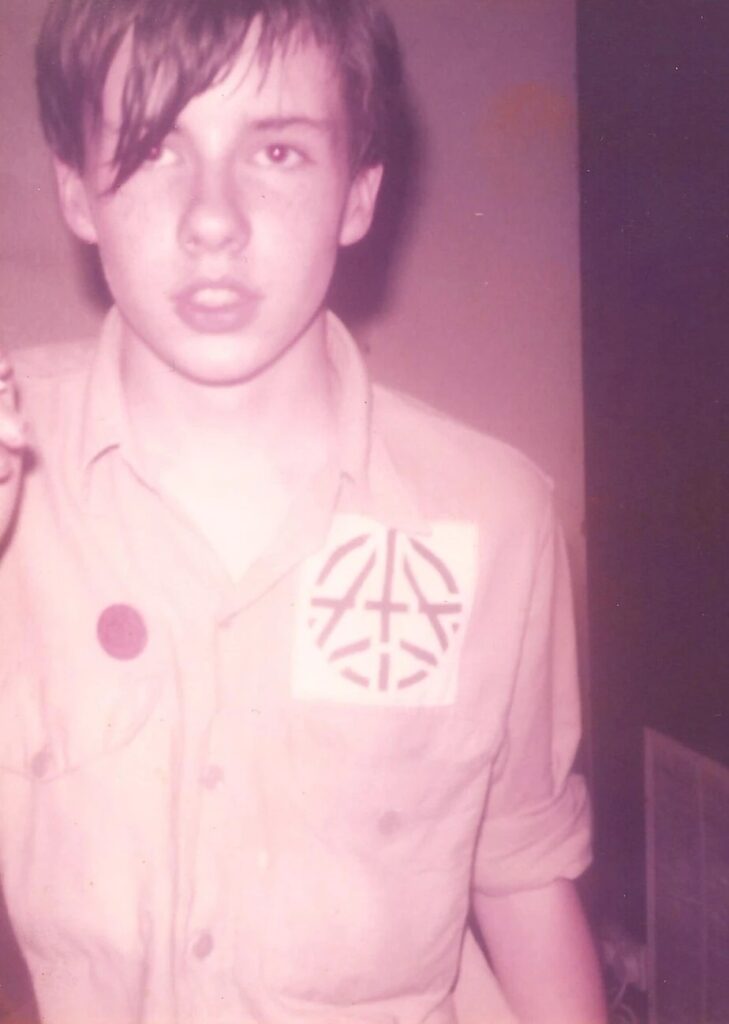
The circle-A originated as an anarchist symbol in the 1960s. Until the rise of punk, it had been mostly confined to small groups in France and Italy. Vivienne Westwood, who did have a sense of its meaning, introduced it to a much wider audience on the clothes she made. Soon, the punk version of the circle-A came, more suggestive of DIY, with the lines of the central A extending beyond the edges of the circle. The 1960s anarchist inventors of the symbol did not mind, explaining that it had never been their intention to depict the Anarchy A as confined by the O of Order, supposedly a reference to a saying by the 19th-century French anarchist Proudhon.

Vivienne Westwood, who did have a sense of its meaning, introduced it to a much wider audience on the clothes she made. Soon, the punk version of the circle-A came, more suggestive of DIY, with the lines of the central A extending beyond the edges of the circle. The 1960s anarchist inventors of the symbol did not mind, explaining that it had never been their intention to depict the Anarchy A as confined by the O of Order, supposedly a reference to a saying by the 19th-century French anarchist Proudhon.
In 1978, there were many punks, many anarchists and many squatters in London. These three groups overlapped but were not identical; e.g., some squatters were both anarchists and punks, others were only one, and still others were neither. In this respect, the situation in The Netherlands was similar.
On 21st October 1978, the Centro hosted its first punk concert: featuring London band Raped, and Northern Irish band Rudi.

Black Flag‘s reaction to punk differed strongly from the British Maoists of Cornelius Cardew’s Communist Party of England (Marxist-Leninist). Cardew advocated ‘wiping out’ anarchists. The Dutch 1970s Maoists of the KEN(ml) supported Spanish governmental violence against anarchists during the 1930s Civil War, as, according to them, these Spanish anarchists were ‘petty bourgeois idiots’ who got what they deserved. The KEN(ml) were no fans of rock music (then, illegal in China), including punk. In England, Cardew attacked The Clash, claiming, similarly to the Daily Mail empire, that punk was ‘fascist’.
Cardew was not just a leader of a Maoist party (social conservatism may exist in that type of political party); he was also a classical music composer. Opposition to newly emergent types of music is not limited to 1970s composers or to Maoist classical music composers.
In 1938 in The Netherlands, jazz duo Nol van Wesel and Max Kannewasser, who used the stage names Johnny & Jones, released a song about a classical composer who hated new forms of music (like jazz at the time). The chorus of their song goes: “Meneer Dinges weet niet wat swing is, hij weet niet wat een saxofoon voor een ding is (Mr Whatshisname does not know what swing is, he does not know what kind of thing a saxophone is)”.
Incidentally, the Mr Dinges in the song lyrics who did not know that saxophones existed is not representative of all classical musicians. The saxophone was invented in the 19th century, and originally played only in classical music. In the 20th century, it found its way into jazz. And later, thanks to Lora Logic of X-Ray Spex, into punk.
The British Trotskyist Workers Revolutionary Party originally agreed with the Evening News and the Maoist Communist Party of England (Marxist-Leninist) in calling punk ‘fascist’. However, contrary to Cardew, they changed their mind, inviting bands like X-Ray Spex to their activities. Another Trotskyist organisation in the UK, the Socialist Workers Party, had been more positive earlier. So was the Communist Party of Great Britain. And the Communist Party of the Netherlands.
How did pre-punk Dutch anarchists react to the rise of punk? A punk fanzine asked a Dutch anarchist group to contribute an article. The contribution explained the group’s views, without mentioning punk. So, not as enthusiastic a reaction as the Black Flag anarchists in England.

The ‘Persons Unknown’ British police anti-anarchist witch hunt against supposed ‘terrorism’ led to a fact-free police raid on the Centro Ibérico at its old Haverstock Hill address. The bouncers at the gambling den there fought the plain clothes police, thinking they were rival gang members!
In 1979, the ‘Persons Unknown’ witch hunt escalated. Crass proposed to have benefit concerts for those innocents accused. On 11th May 1979, Crass, Poison Girls and Charge played in Conway Hall. On 8th September 1979, Crass, Poison Girls and The Rondos from Rotterdam played in the same hall. On 19th December, the jury acquitted the accused anarchists. That meant that the money of the ‘Persons Unknown’ defence fund was no longer needed for this court case.
The plan arose to use that money to found an anarchist centre. Crass and Poison Girls offered to make a benefit record, without either themselves, the Southern recording studio or Rough Trade making any money from it. A police raid on the print shop that printed the record covers did not stop the record’s release in May 1980. It sold ten thousands of singles, even though HMV stores destroyed their copies, fearing the police. On one side of the single was ‘Persons Unknown‘ by Poison Girls, with its rhythm somewhat reminiscent of Siouxsie and the Banshees, and the distinct, moving vocals of Vi Subversa.
On the other side was ‘Bloody Revolutions‘ by Crass, with lyrics opposing vanguardist views of revolution, like those among European Maoists.
The single’s liner notes said: [the new centre] “could mean that anarchist punks will have somewhere of their own to go”.
Nick Soulsby, interviewed by Richard Cross on the book, stated that ‘the anarcho-punks of 1979-1982 were very different to the original punks of 1975-1978’. That may be true for the UK. Not for The Netherlands: where, among punks, anarchism, and UK bands like Crass, Poison Girls, Zounds, and The Mob were beloved and influential, but where an ‘anarcho-punk’ subculture like that in the UK did not arise. Also: Crass is a 1975-1978 original punk band, inspired by the Clash, founded in 1977. Poison Girls are a 1975-1978 original punk band, inspired by the Buzzcocks, founded in 1976. Zounds are a 1975-1978 punk band, inspired by the Sex Pistols, founded in 1977. The Mob are a 1975-1978 punk band, founded in 1977.
So, where would the new anarchist centre be? Some suggested the existing Centro Ibérico squat building. But a warehouse in Wapping was selected. Wapping then was a sort of wasteland, with many abandoned buildings. Tony Drayton of the Kill Your Pet Puppy fanzine, Ruth Doll, singer of Hagar the Womb, and Penny Rimbaud, drummer of Crass, doubted whether this was the correct choice of place…

The venue, officially called Autonomy Centre, opened on 18th September 1981. Big commercial music venues hated it. It had no licence. No drinks available, toilets not flushing. It soon got into financial trouble. Nick Soulsby writes that he could not find the details of what caused that money trouble. Overwhelmingly, the income had come from Crass, Poison Girls and other anarchist punks. Veteran pre-1970s anarchist Albert Meltzer later blamed vandal punks for the centre’s demise (some older anarchists did not like punk graffiti); but Tony Drayton denies that and Soulsby doubts it. Punk concerts provided about the only income for the Autonomy Centre. The landlord had it closed down, its final concert was held on 21st February 1982. Crass concluded that “a lot of the money that we, Poison Girls and many others put into the centre was wasted”.
Most of the furniture and interested people moved to the Centro Ibérico.
On 4th December 1981, Miguel García died of tuberculosis. Punk band The Apostles recorded a demo called ‘For Miguel García‘.

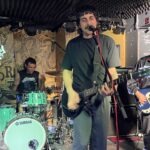
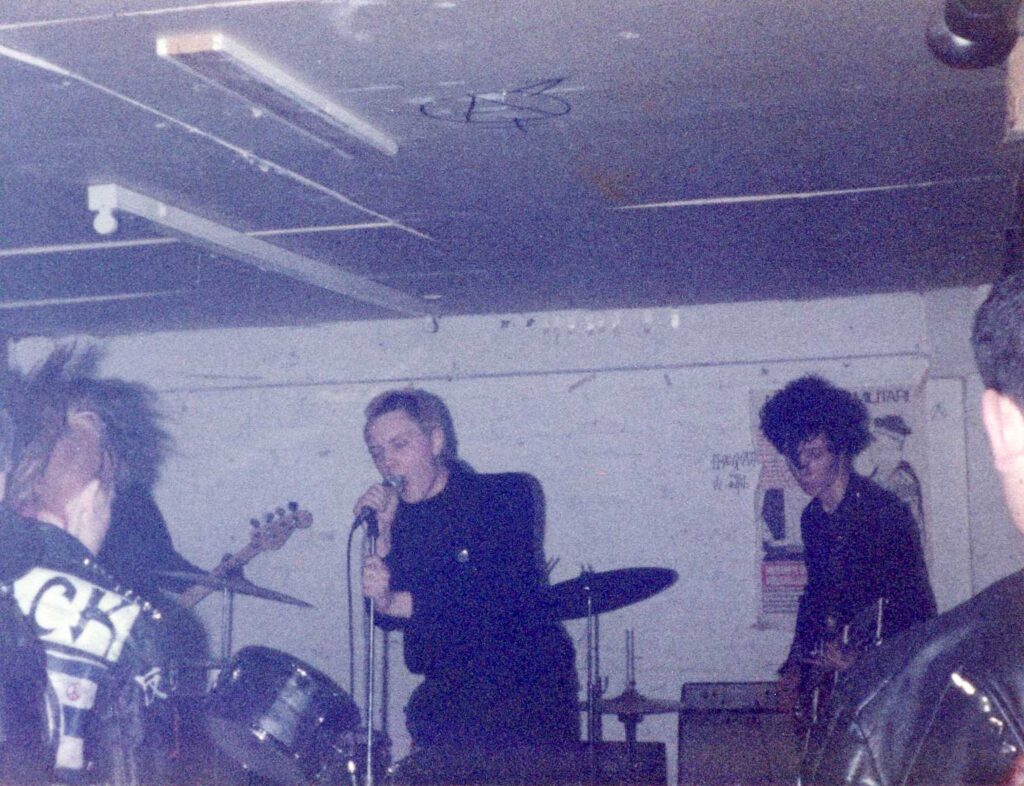
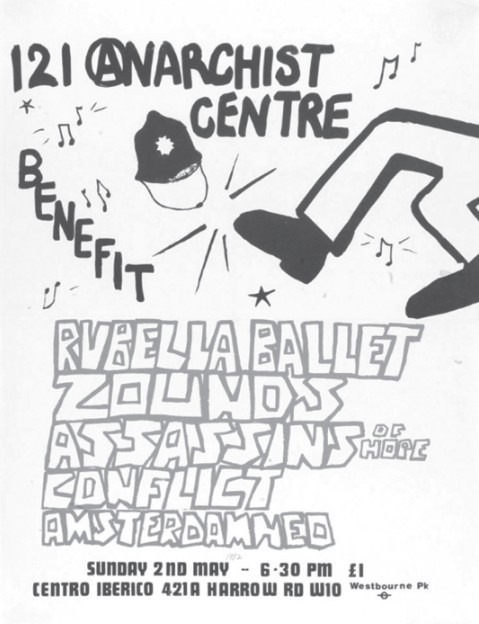
Zounds and The Mob had played together at both the Centro Ibérico and in Wapping, and played the Centro Ibérico again on 5th March 1982. Amsterdamned from the Netherlands came, playing on 2nd May, together with Rubella Ballet, Zounds, Conflict and Assassins of Hope. With four hundred people listening in the hall, and a hundred more outside it. Sid Truelove of Rubella Ballet was worried about his drum kit, because of the reputation of the Assassins of Hope…
On 14th March, Annie Bandez aka Annie Anxiety, who had often performed with Crass and Poison Girls, introduced Wattie of The Exploited to the Centro Ibérico. Some in the audience objected to Wattie (he had been on Top Of The Pops on TV, not liked by many punks) and threw stuff at him. Still, Wattie asked if his band could play in the centre.

In June, UK Decay, Sex Gang Children and Blood and Roses played one week before the Batcave club opened. These bands would later be considered goth, but they did not know that yet. Richard Cabut, then bassist of Brigandage, was the doorman that night.
Then, according to Tony Drayton, the opening of the Batcave and other new clubs, combined with the exhaustion of organisers, after a few more concerts in August 1982, led to the end of the Centro Ibérico as a music venue. And later to eviction, and the demolition of the building.
This video of Omega Tribe live at the Centro Ibérico on 13th August 1982, has as its tracklist: ‘Kings & Punks‘, ‘Meat Means Murder‘, ‘Exploitation‘, ‘Bullshit Broadcast‘, ‘Vietnam Serenade’, ‘No Island Of Dreams‘. The photos on the video are by Tony Drayton.
Nick Soulsby deserves praise for his meticulous research into the many details of these parts of the history of punk and of anarchism. My only criticism is that the book has no index, which makes it difficult if you want to look for an individual person, an individual band, etc.
Published on 1st June, buy your copy of ‘Born of Struggle, Living in Hope: The Anarcho-Punk Lives of the Centro Iberico, 1971-1983’ from HERE
Follow Nick Soulsby on His Socials:
Need more Punk In Your Life?

Album review: Taxi Girls drop dynamite debut ‘Static’
Montreal’s Taxi Girls herald their arrival with ‘Static’, their debut full-length album, out on 26th June via Stomp Records. Pulling together giant hooks, sharp songwriting,

Album review: IDEOMOTOR know we ‘Don’t Need It’
Hooray! Dumb music for smart people living in horrific times! Remember kids, just say “no” to fascism. IDEOMOTOR, a three-piece band with a rotating crew

Special preview screening – ’50 Years of Punk’ feature film!
To celebrate this momentous anniversary, the new ’50 Years of Punk’ documentary traces the explosion of punk on London’s Kings Road, and is the most

Album review: If This Is What Essex Sounds Like, Turn It Up! Rat Boy’s new release ‘CRASH!’
There are records that arrive politely. This is not one of them. ‘CRASH!’, the new album by Essex genre-bending indie Punks Rat Boy, does as

Album review: The Dead Krazukies release 4th LP – ‘CIPHER’
Hailing from the southwestern French town of Hossegor, The Dead Krazukies are a band often described as being a skate punk outfit – a lazy

Album Review: Dead Strong release ‘147 Days’ musical diary
Straight out of Austin, Texas, this one man project Dead Strong commentates on the current US political climate… It is indeed melodic punk with a
In 1978 Herman co-founded Dutch Rock Against Racism and was a founder of Pin punkzine. He’s vocals/saxophone for Cheap ‘n’ Nasty and in 2021 co-founded the Punk Scholars Network, Netherlands.



Did you know that we are 100% DIY? We run our own game. No one dictates to us, and no one drives what we can or cannot put on our pages – and this is how we plan to continue!